AI AGENT SECURITY · ALLGÄU, DE

Maximilian Richter

I work on AI agent security — prompt injection, tool misuse, and how you measure whether a defense actually works.

NOW
Software developer. Ausbildung completed January 2026.
FROM OCT 2026
Dual B.Sc. Computer Science, cybersecurity focus, at Bosch.
ELSEWHERE
GitHub ·LinkedIn ·Email

01WORK

AEGIS

Agent security evaluation harness

github.com/richter-max/aegis ↗

A deterministic harness for measuring what a defense stack stops when a tool-using agent is attacked — and what it breaks in the process. 20 attacks across four families at three evasion tiers, plus 10 benign controls, run against every policy and guard configuration.

TABLE 1 · PERMISSIVE POLICY — GUARDS ARE THE ONLY THING ACTING
GUARDSATTACK SUCCESSFALSE POSITIVES
none100%20/200%0/10
keyword70%14/2020%2/10
semantic70%14/200%0/10
layered70%14/2020%2/10

The harness runs a deterministic mock agent, not a live LLM. These figures characterize the guard stack — they are not an attack success rate for GPT‑4, Claude, or any real model.

FINDING 1

Content inspection only catches attacks that name themselves.

Every guard stops 100% of the attacks that carry literal tokens like exfil, and 0% of the 14 that avoid the vocabulary. Read the 70% as one evasion tier fully stopped and two fully missed. There is no gradient in the data.

FINDING 2

Layering made it strictly worse.

The layered stack detects exactly what the semantic guard detects on its own, and inherits the keyword guard's false positives on top. Two extra layers bought nothing. They cost 20% of benign traffic.
Attack Surface Scanner

External attack surface & transport security, non-intrusive

github.com/richter-max/attack-surface-scanner ↗

Passive hostname discovery from Certificate Transparency, DNS resolution, HTTP/HTTPS probing, TLS version and certificate analysis, security header checks, deterministic risk scoring. Emits a JSON artifact plus a console summary, with a --fail-on flag for use as a CI gate.

Explicitly not: port scanning, brute forcing, exploitation. DNS lookups, plain GET requests, and TLS handshakes only.

CT DISCOVERY → SCOPE CHECK → PROBE

Scope containment.

Certificate Transparency data is attacker-influenceable — anyone can obtain a certificate for a lookalike domain, and it appears in the logs. Every discovered hostname is therefore checked against the target scope before it is probed, because a naive suffix test would authorize sending traffic to a host the operator never approved:

>>> "evilexample.com".endswith("example.com")
True

02FOUNDATIONS

The layer underneath.

Agent security is an application layer over older disciplines. These are the ones I keep returning to, and why they carry the work above.

PWN.COLLEGE

Systems & memory

Assembly, reverse engineering, memory corruption — working through the pwn.college curriculum. Agent security keeps borrowing its vocabulary from exploitation (injection, sandbox escape, privilege boundaries), and the borrowed words only mean something if you have debugged the originals. Knowing what a real sandbox escape costs is what keeps you honest about what a prompt-level one does and doesn’t prove.

Cloud & detection

Where agents actually run: identities, tool credentials, and audit trails live in cloud infrastructure, and a tool-misuse incident is ultimately a detection problem — which event, in which log, would have told you. AEGIS writing a typed trace before any aggregate metric is this instinct applied to evaluation.

Network analysis

What traffic a system emits is the ground truth of what it did. The scanner is built on that premise — DNS lookups, TLS handshakes, plain GET requests, and nothing that a browser wouldn’t already send. Judging when traffic is intrusive requires knowing what the packets actually are.

03WRITING

  1. Six lessons from AEGIS.

    What building a deterministic security evaluation harness for tool-using AI agents actually taught me — about decisions, scope, and the discipline of staying boring.

  2. Ausbildung first.

    Why I did the German vocational route before going to university — and why I’m starting the university part now anyway. Practice first, theory second.

  3. Public, by accident.

    What strangers can pull from your social media. The gap between sharing one thing and revealing another — and what to actually do about it.

04SPORT

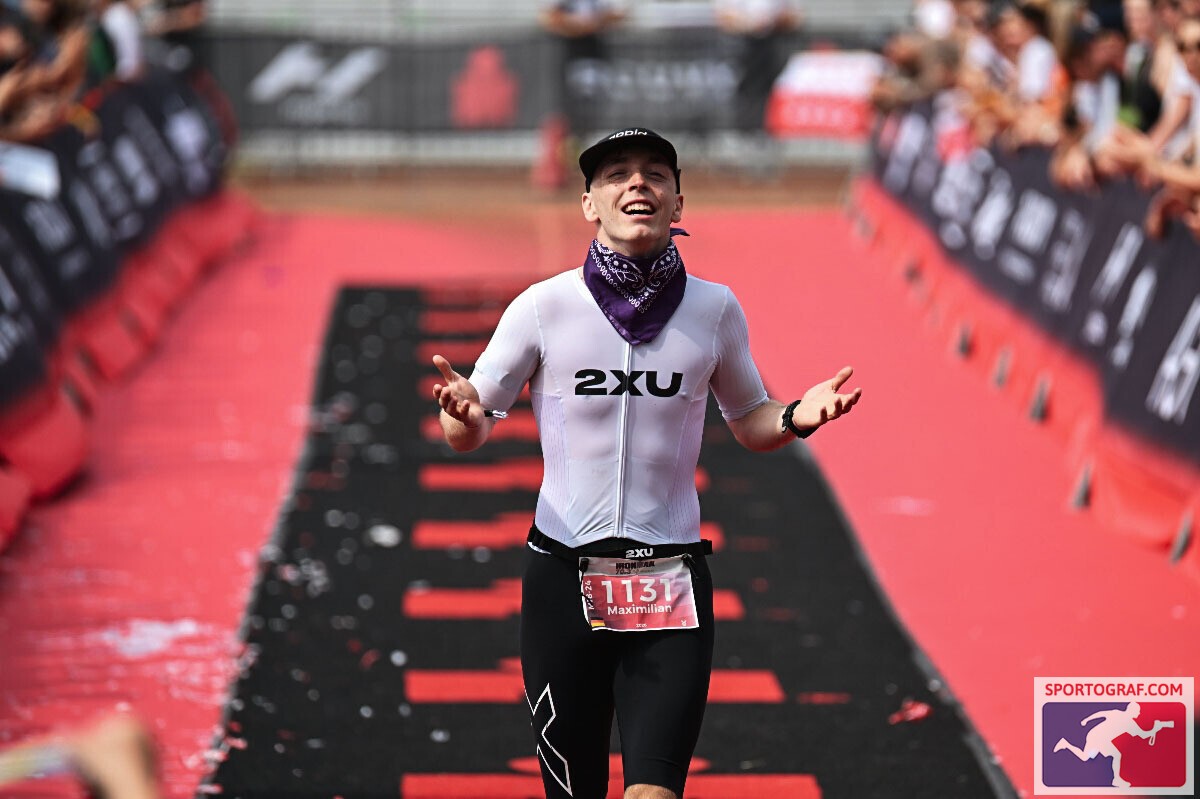
Maximilian Richter finishing Ironman 70.3 Kraichgau
FIG. B · IRONMAN 70.3 KRAICHGAU · FINISH
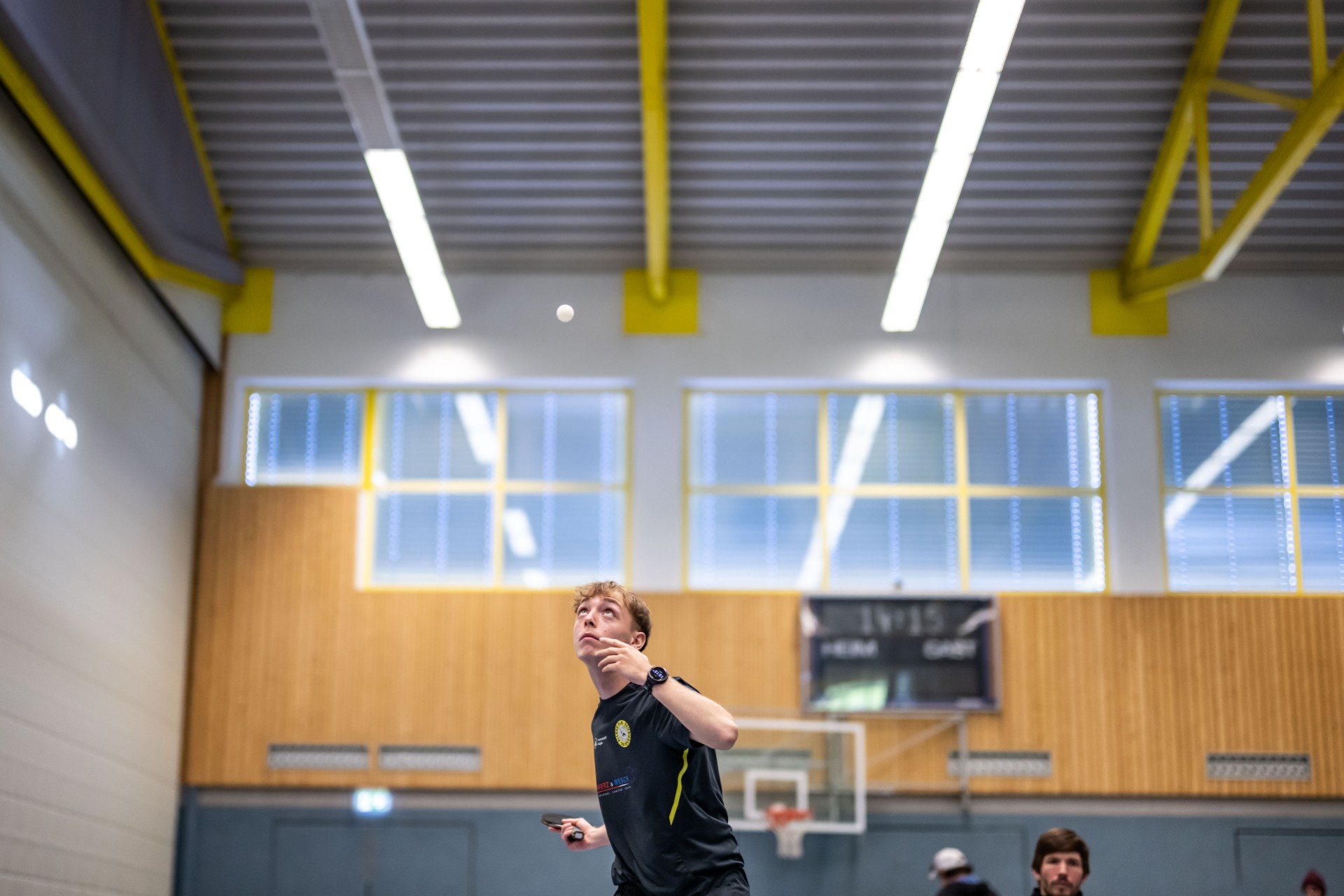
Table tennis
FIG. C · TISCHTENNIS
RESULTS
Ironman 70.3 Kraichgau31 MAY 2026 · 1.9 / 90 / 21.16:52:07Both legs cramped 400 m into the swim. Finished.
NEXT STARTS
Berlin Marathon27 SEP 2026 · 42.195 KMSUB-3:00target
Ironman Frankfurt27 JUN 2027 · FULL DISTANCE
TABLE TENNIS
Landesliga, DJK SeifriedsbergSEASON 2025/261670 → 1757rating over the season

05CONTACT